
SR-22 Without Prior Coverage — Illinois
Free to compare
The Coverage Gap That Blocks Reinstatement
Your Illinois license is suspended and the Secretary of State requires SR-22 proof-of-insurance filing before you can reinstate. But you don't currently have auto insurance — your policy lapsed months ago, or you were dropped after the violation, or you never carried coverage in the first place. When you call carriers for quotes, they ask about your current coverage and your insurance history over the past six months. When you say you have none, most hang up or quote rates so high they feel punitive.
This is the coverage-gap blocker: carriers price risk using your insurance continuity as a signal. A gap longer than 30 days flags you as high-risk even before they see the violation that triggered the SR-22 requirement. The suspension itself already moves you into the non-standard tier; the coverage gap compounds that placement and narrows the field of carriers willing to write your case. You're not shopping for the best rate — you're trying to find any carrier that will file the SR-22 at all.
“Non-owner SR-22 policies provide proof-of-insurance filing without requiring you to own a vehicle or show prior coverage continuity.”

See What an SR-22 Really Costs in Illinois
Get My Illinois SR-22 Auto Insurance Quote$8
Illinois RDP Application Fee
If you need to drive during suspension, Illinois offers a Restricted Driving Permit (RDP) that allows work, medical, and treatment-related travel. The application fee is $8, but the RDP requires proof of SR-22 insurance before the Secretary of State will issue the permit.
Illinois Secretary of State Safety and Financial Responsibility Division
Why Standard Carriers Reject No-History Applications
Standard-tier carriers — State Farm, Allstate, Farmers — use insurance continuity as an underwriting datapoint. A coverage gap signals elevated risk independent of your driving record. Their actuarial models penalize gaps longer than 30 days, and most will decline to quote gaps beyond 90 days. When you add the SR-22 filing requirement on top of that gap, the standard tier exits entirely.
Non-standard carriers — Dairyland, Bristol West, The General, Progressive's non-standard division — write high-risk cases specifically, but even they have coverage-history thresholds. Some will quote a 6-month gap if your violation is recent and the suspension period explains the lapse. Others cap acceptance at 12 months and refer longer gaps to specialty programs. A few carriers treat any gap as disqualifying and only write drivers transferring from another active policy.
The structural reality: you cannot restore your license without SR-22 filing, and most carriers will not file SR-22 without selling you a policy, and most policies require insurance history you don't have. This is the procedural loop that keeps suspended drivers stuck.
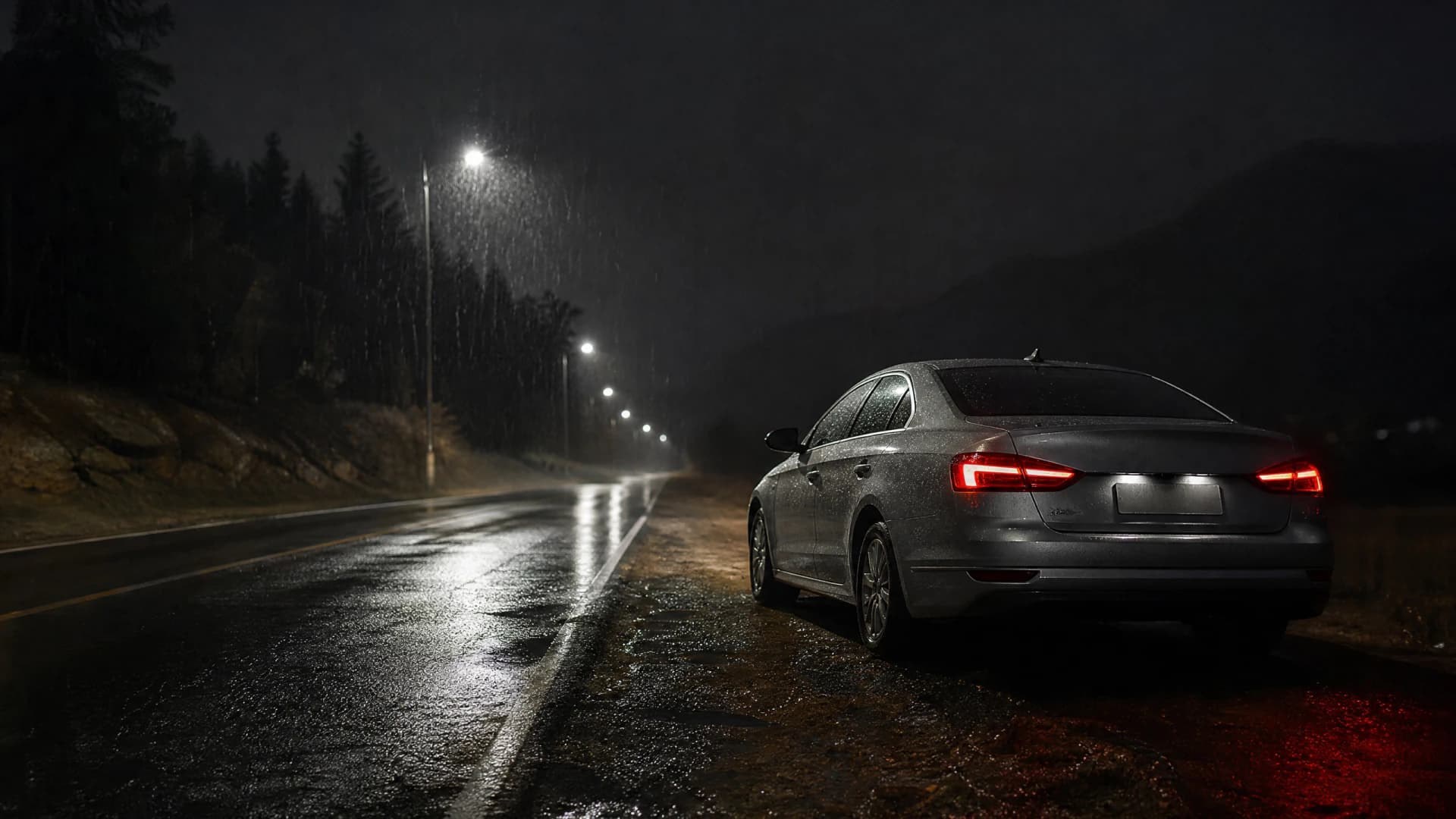
Non-owner SR-22 policies break the loop — they provide proof-of-insurance filing without requiring you to own a vehicle or show prior coverage continuity.





What Non-Owner Policies Do Not Cover
A non-owner policy provides liability coverage when you drive a vehicle you do not own — a borrowed car, a rental, a friend's vehicle. It does not cover collision or comprehensive damage to that vehicle. If you borrow a car and cause an accident, your non-owner liability policy pays for the other driver's injuries and property damage up to your policy limits. The vehicle owner's collision coverage pays for damage to the car you were driving. If the owner has no collision coverage, the car is not covered.
Non-owner policies explicitly exclude vehicles you own, vehicles registered to you, vehicles available for your regular use, and vehicles owned by household members. If you live with someone who owns a car and you drive it regularly, you must be listed on their policy as a named driver — a non-owner policy will deny any claim involving that vehicle. The product assumes you drive infrequently and do not have regular access to a specific car.
If you need to drive during suspension under an Illinois Restricted Driving Permit (RDP), a non-owner SR-22 policy satisfies the insurance requirement. The RDP itself restricts you to specific routes and times — typically work, medical appointments, school, and court-ordered treatment programs. The non-owner policy does not expand or restrict those permissions; it only proves you carry the liability coverage the state requires.
3 years
Illinois SR-22 Filing Period
Illinois requires SR-22 filing for 3 years after reinstatement for DUI-related suspensions. The filing period begins when your license is restored, not when the suspension started. If you let the policy lapse during those 3 years, the carrier notifies the Secretary of State and your license is suspended again immediately.
Illinois Secretary of State SR-22 program rules

Monthly Cost and What Drives It Higher
Non-owner SR-22 policies typically cost less than standard owner policies because they cover lower risk. You're not insuring a specific vehicle against theft, weather damage, or collision — only your liability exposure when driving. The filing itself adds a small one-time fee set by the carrier, usually between $15 and $50 depending on the insurer. Monthly premiums vary by violation type, driving history, age, and county.
DUI violations and uninsured-driving suspensions push premiums higher than points-based suspensions or lapsed-insurance cases. Carriers treat refusal to submit to chemical testing (a statutory summary suspension trigger in Illinois) as equivalent to a DUI for pricing purposes. If your suspension stems from unpaid tickets or failure to appear in court, and you have no moving violations on record, you may qualify for the lower end of non-owner pricing. If the suspension followed a DUI arrest, expect quotes at the higher end of the carrier's non-standard tier.
Age and county matter. Drivers under 25 or over 75 pay higher premiums regardless of violation type. Cook County and other high-density regions carry higher base rates than rural counties. Some carriers add surcharges for specific ZIP codes with elevated accident or theft rates. The only way to know your actual cost is to request quotes from multiple carriers writing non-owner SR-22 in your county.
Compare Carriers That Write No-History Cases
Not every carrier writing SR-22 in Illinois writes non-owner policies, and not every carrier writing non-owner policies accepts drivers with long coverage gaps. Start with Dairyland, The General, GAINSCO, and Bristol West — these four specialize in high-risk and non-standard cases and explicitly market non-owner SR-22 products. Progressive writes non-owner policies but may decline applications with gaps longer than 12 months depending on the violation. Geico writes non-owner SR-22 but evaluates coverage history case-by-case and may refer long-gap applicants to a non-standard affiliate.
Request quotes from at least three carriers. Provide your suspension letter, your license number, the violation date, and the reinstatement conditions stated by the Secretary of State. Be direct about your coverage gap — hiding it delays the quote and wastes time. Carriers verify insurance history through databases like LexisNexis and CLUE; they will find the gap regardless. Honest disclosure speeds the underwriting process and eliminates carriers that cannot write your case before you invest time in an application.
Compare SR-22 carriers writing Illinois non-owner policies and see which accept drivers with no prior coverage. The comparison tool filters by violation type, county, and coverage-gap length so you see only carriers likely to approve your application.
How Non-Owner SR-22 Solves the History Problem
Non-owner policies cost less than standard auto policies because they carry lower risk: you're not covering collision or comprehensive damage to a vehicle you own, only liability exposure when you drive someone else's car or a rental. Illinois requires minimum liability limits of $25,000 per person for bodily injury, $50,000 per accident, and $20,000 for property damage. A non-owner policy meets those minimums and allows the carrier to file SR-22 with the Secretary of State on your behalf. The filing proves to the state that you carry continuous coverage, which satisfies the reinstatement condition even though you don't currently own a car.
Carriers writing non-owner SR-22 in Illinois include Dairyland, The General, GAINSCO, Bristol West, Progressive, USAA (military-affiliated only), and Geico. These carriers specialize in non-standard and high-risk cases and do not penalize coverage gaps as aggressively as standard-tier underwriters. Some will write a non-owner policy immediately after a suspension begins; others require a 30-day waiting period from the violation date. None require proof of prior insurance as a condition of the non-owner quote — the product exists specifically for drivers without current coverage.
Get Your Free Quote
Get My Illinois SR-22 Auto Insurance QuoteFrequently Asked Questions
Can I get SR-22 insurance in Illinois if I've never had auto insurance before?
Yes. Non-owner SR-22 policies do not require prior insurance history. Carriers writing non-standard and high-risk cases — Dairyland, The General, GAINSCO, Bristol West — accept first-time insurance buyers who need SR-22 filing to satisfy Illinois Secretary of State reinstatement conditions. You will pay higher premiums than a driver with continuous coverage, but approval is not blocked by the absence of prior insurance.
How much does non-owner SR-22 insurance cost in Illinois?
Monthly premiums vary by violation type, age, county, and driving history. DUI-related suspensions cost more than lapsed-insurance or points-based cases. Drivers under 25 or over 75 pay higher rates. Cook County and high-density regions carry higher base premiums than rural areas. The SR-22 filing itself adds a one-time fee of $15 to $50 depending on the carrier. Request quotes from multiple carriers to see actual cost for your situation.
Does a non-owner SR-22 policy let me drive any car in Illinois?
A non-owner policy covers you when driving a vehicle you do not own and do not have regular access to — borrowed cars, rentals, friend's vehicles. It does not cover vehicles you own, vehicles registered to you, or vehicles owned by household members that you drive regularly. If you live with someone who owns a car you drive often, you must be added to their policy as a named driver.
What happens if my non-owner SR-22 policy lapses during the 3-year filing period?
The carrier notifies the Illinois Secretary of State immediately when your policy lapses or is cancelled. The state suspends your license again the same day it receives the lapse notification. You must purchase a new policy, file a new SR-22, pay a reinstatement fee, and restart the 3-year filing clock from the new reinstatement date. There is no grace period.
Can I switch from a non-owner SR-22 policy to a standard policy if I buy a car later?
Yes. When you purchase a vehicle, you switch to a standard owner policy and the carrier transfers your SR-22 filing to the new policy. The 3-year filing period continues without interruption as long as you maintain continuous coverage with no lapses. Notify your carrier immediately when you buy the car so they can issue the owner policy and update the SR-22 on file with the Secretary of State.
Do I need SR-22 insurance to get a Restricted Driving Permit in Illinois?
Yes. Illinois requires proof of SR-22 insurance before issuing a Restricted Driving Permit (RDP). The RDP application costs $8 and allows limited driving for work, medical appointments, school, and court-ordered treatment programs. You must show the Secretary of State that you carry active SR-22 coverage before the permit is granted. A non-owner SR-22 policy satisfies this requirement if you do not own a vehicle.
Will Illinois accept an SR-22 from an out-of-state carrier?
No. Illinois requires SR-22 filing from a carrier licensed to write auto insurance in Illinois. If you move to Illinois from another state during your filing period, you must cancel your out-of-state policy and purchase a new Illinois policy with SR-22 filing from an Illinois-licensed carrier. Contact the Secretary of State to confirm the transfer process before cancelling your old policy to avoid a coverage gap.